Colonial era drama comparison: 7 to 8% land control
"The history of the colonial era is often a tug-of-war between cinematic grandeur and the harsh realities of economic data."
Analyzing the historical accuracy of period dramas involves looking at land ownership, taxation, and industrial control. This guide compares economic realities with narrative trends to understand how historical settings are reconstructed.
Key takeaways include understanding land ownership shifts, the disparity in industrial capital, and the impact of taxation on the populace.
How do land ownership trends shape period dramas?
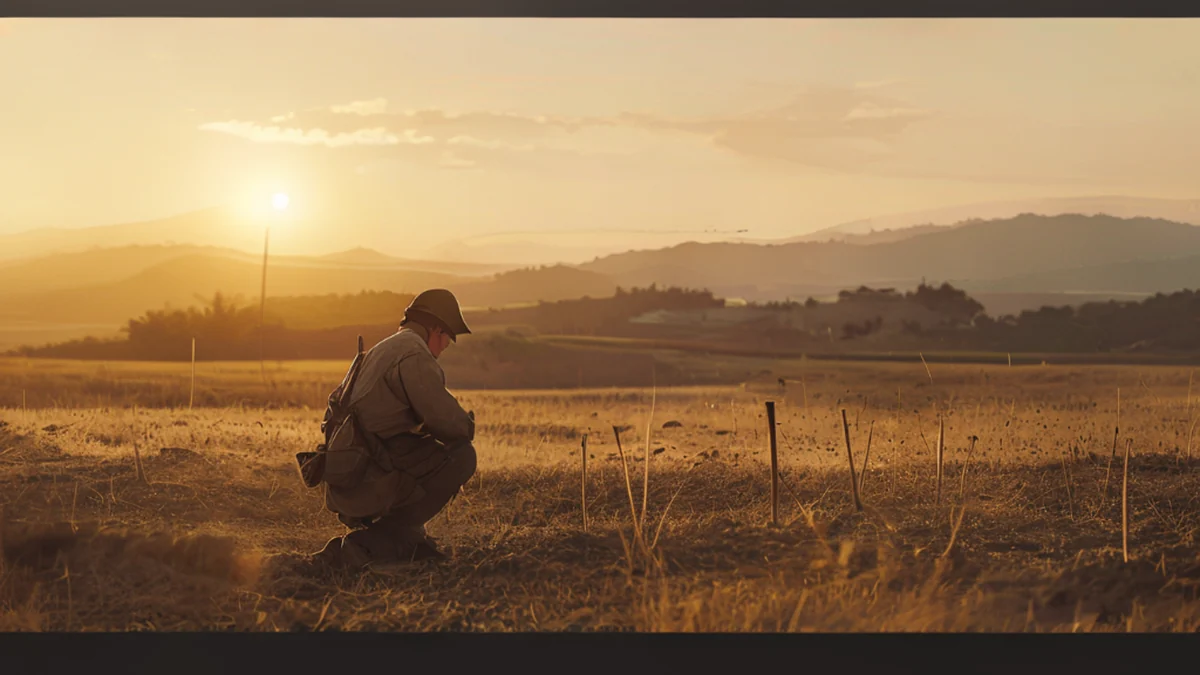
At sunset, a lonely surveyor kneels in the dusty field to mark the shifting colonial boundaries with a sharp wooden stake.
A filmmaker adjusts a camera lens to capture a sprawling field of golden rice. The visual representation of land often masks the complex shifts in ownership occurring behind the scenes.
Historical data shows that by 1910, an estimated 7 to 8% of all arable land in Korea had come under Japanese control. This ratio increased steadily; as of the years 1916, 1920, and 1932, the ratio of Japanese land ownership increased from 36.8 to 39.8 to 52.7%.
These shifts define the tension in many colonial era drama comparison stories.
The changing landscape of ownership directly influences how characters interact with their environment. While a single field might look peaceful, the underlying legal shifts changed the lives of millions.
What were the economic realities of the era? Colonial era drama comparison
At dusk, a merchant grips a heavy coin purse with trembling hands while sitting in his dim colonial shop.
A merchant counts coins at a wooden desk while a tax collector waits outside. The economic atmosphere of a period piece is often built on these moments of financial pressure.
Koreans faced heavy taxation, with rates in some cases exceeding 50%. This heavy burden shaped the daily survival of many families. Such high rates are a common backdrop for Japanese occupation drama trends.
The disparity in wealth was often tied to the scale of business. While Koreans owned about 61 percent of small-scale firms that had 5 to 49 employees, about 92 percent of large-scale enterprises with more than 200 employees were Japanese-owned.
How did industrial capital influence the setting?
A factory whistle blows loudly over a bustling industrial district. The sight of massive chimneys and steel structures provides a sense of modernization in many films.
A 1939 statistic shows that among the total capital recorded by factories, about 94 percent was Japanese-owned. This dominance in industry creates a specific power dynamic in historical Korean cinema study.
The struggle for local industry was further complicated by unfair lending. Korean entrepreneurs were charged interest rates 25 percent higher than their Japanese counterparts, so it was difficult for large Korean enterprises to emerge.
What were the living conditions for the majority?
A farmer wipes sweat from their brow while looking at a small plot of land. The struggle for subsistence is a recurring theme in period-accurate storytelling.
The 70% of the agricultural workers who made up most of Korea's population at the time were reduced to tenants of Japanese and Korean landlords who purchased land at low prices, and they had to pay high rents of 50–70%. This reality reflects the hardships seen in Recreating colonial times.
Food security was another critical factor in the lives of the populace. Although the government imported coarse grains from Manchuria to augment the Korean food supply, per capita consumption of food grains in 1944 was 35 percent below that of 1912 to 1916.
How do we compare these historical layers?
A researcher lays out various documents on a large table to find connections. Comparing data points helps clarify the true scope of historical shifts.
| Category | Ownership/Statistic |
|---|---|
| Japanese Land Ownership (1932) | 52.7% |
| Large-scale Enterprise Ownership (Japanese) | 92% |
I look at these figures to see how they might manifest in a scripted scene. The data provides a foundation for understanding the power structures in a period setting.
How can viewers verify historical accuracy?
A viewer holds a book in a quiet library, checking dates against a film's timeline. Verification requires looking at specific economic indicators.
- Examine land ownership ratios to see if they match the specific year depicted. 2. Check the scale of industry to see if the business ownership reflects the era. 3. Compare taxation and interest rate data to understand character motivations. 4. Verify the final timeline against known statistical shifts.
One limitation is that specific data like the 1.5 percent indigenous capital figure in 1942 only applies to specific industrial investment contexts.

Wikipedia: Korea under Japanese rule Based on the retained excerpt mentioning Seoul National University: Lee Young-hoon, a professor at Seoul National University states that less than 10% of arable land actually came under Japanese control and rice was normally traded, not robbed.
- How do land ownership trends shape period dramas?
- What were the economic realities of the era?
- How did industrial capital influence the setting?
The same subject is also called Joseon period film analysis.
The same subject is also called Period drama themes Korea.
This part also covers Mr Sunshine vs Handmaiden.
This part also covers Korean historical drama styles.
Mr Sunshine vs Handmaiden
Related



Comments 0